 (855) 369-9993
















Duncan Family Law Divorce Lawyers Beverly Hills
December 27, 2025
A prenuptial agreement, often called a prenup, is an optional and voluntary written agreement that two people sign before getting married. It explains how certain financial issues will be handled if the marriage ends. In California, prenups focus on money matters like property, debts, and spousal support—not personal or parenting issues.
What Is a Prenuptial Agreement in California?
In simple terms, a prenuptial agreement is a contract that takes effect once a couple gets married. It allows couples to set their own financial rules instead of relying on California’s default divorce laws, as long as those rules follow the law.
Prenup Example
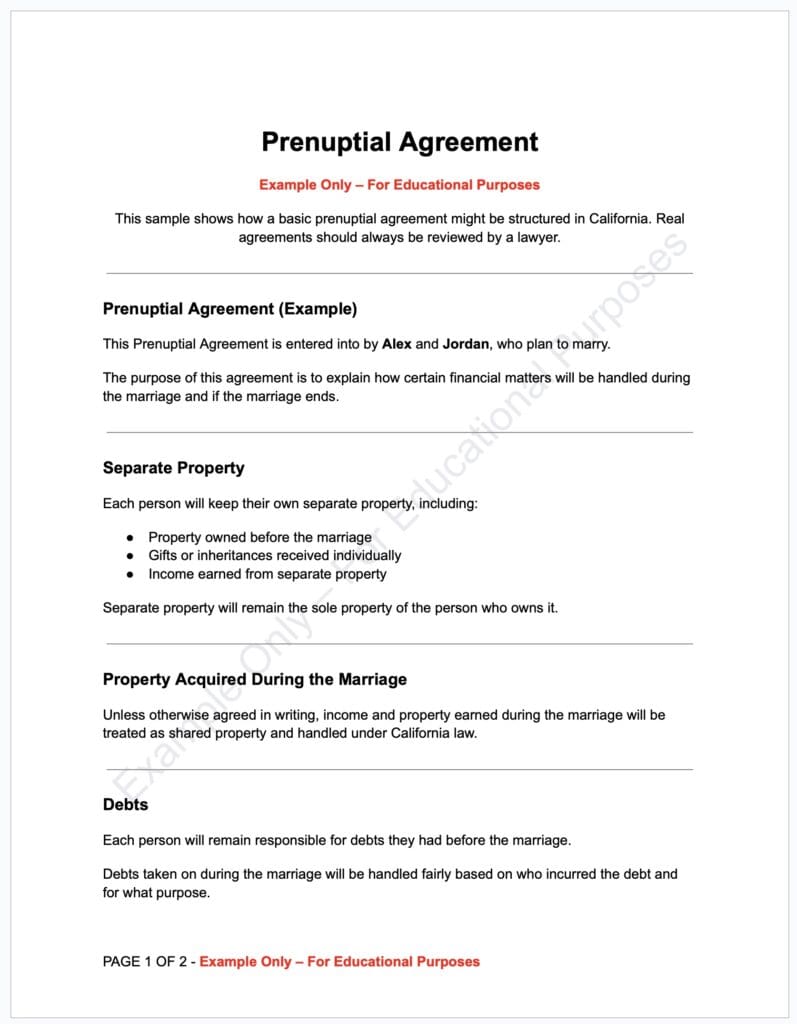
Prenuptial Agreement Example Only For Educational Purposes Page 1 of 2
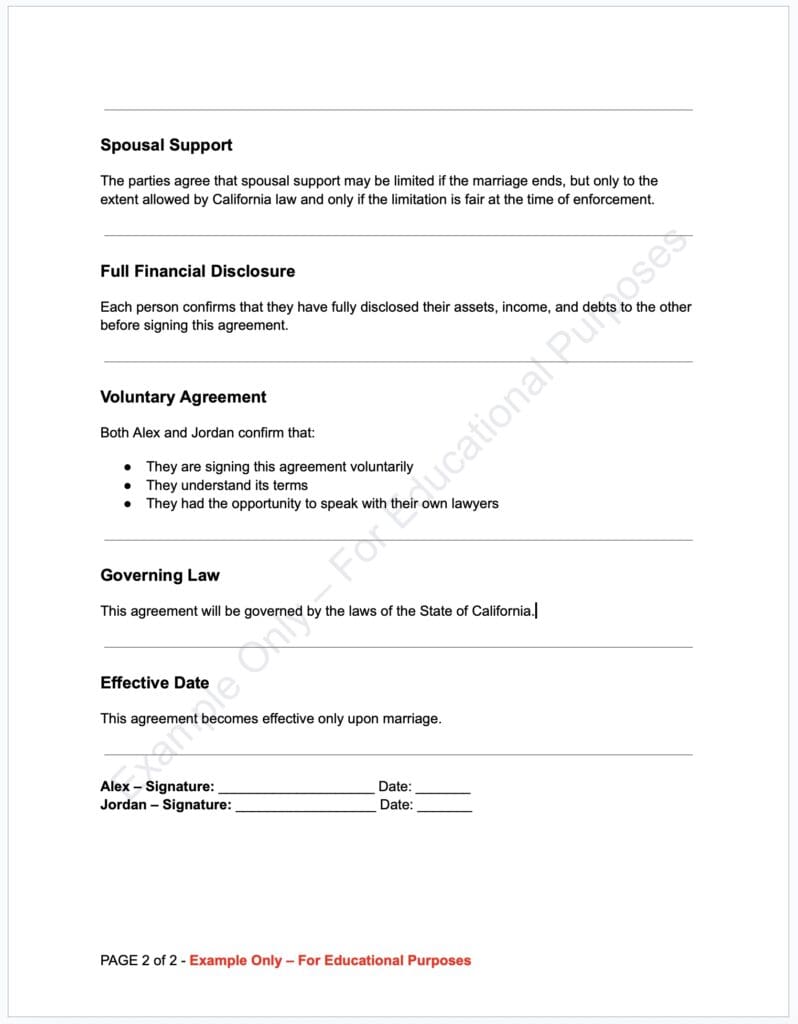
Prenuptial Agreement Example Only For Educational Purposes Page 1 of 2
What a California Prenup Can Cover
California law allows prenups to address many financial topics. Most prenups focus on how money and property will be handled during the marriage and divided if it ends.
Common topics include:
- Which assets are separate property and which are shared
- Who manages certain assets during the marriage
- How debts are handled, including debts from before marriage
- Whether spousal support may be limited or waived in certain situations
What a Prenup Cannot Decide
Even though prenups are flexible, they have limits. A prenup cannot decide child custody or child support. These issues are always decided by a judge based on what is best for the child at the time of separation.
How California’s Community Property Rules Affect Prenups
California is a community property state. This means that, without a prenup, most money, property, and debts gained during the marriage are usually split equally if the couple divorces.
A prenup gives couples a chance to change those default rules. For example, it can state that certain income, assets, or debts belong to only one spouse instead of being shared.
What Makes a Prenup Enforceable in California?
For a prenup to be enforced in California, certain basic rules must be followed. Both people must sign voluntarily, fully disclose their finances, and understand what they are agreeing to.
Courts look especially closely at spousal support terms to make sure they are fair at the time the agreement is enforced.
Timing and Legal Review (California Rule)
California law sets a clear timing requirement for prenuptial agreements. If a prenup affects spousal support or financial rights, the final agreement must be given to both parties at least 7 days before it is signed. This rule exists to prevent pressure, last-minute changes, or rushed decisions.
In addition, each person must have their own lawyer for spousal support terms to be enforceable. If one person does not have independent legal counsel, a spousal support waiver or limitation will not be upheld by the court, no matter what the agreement says.
Why this matters
Courts do not just look at what the prenup says — they look closely at how and when it was signed. Agreements signed too quickly, without enough time to review, or without separate lawyers are much more likely to be challenged or rejected later.
Why Couples Choose Prenuptial Agreements
Couples choose prenups for many practical reasons. These can include owning a business, having children from a prior relationship, bringing significant assets into the marriage, or having very different financial situations.
In Los Angeles, prenups often come up in divorces involving complex finances or high-value assets.
How Prenups Are Used in Los Angeles Divorces
When a marriage ends, a valid prenup can greatly affect how property is divided and whether spousal support is paid. Los Angeles courts generally enforce prenups that were properly written and signed under California law.
In practice, courts usually focus less on whether a prenup feels fair years later and more on whether both people understood it, agreed to it freely, and fully disclosed their finances at the time it was signed.
When People Usually Seek Legal Help
Many people talk to a lawyer when they are thinking about signing a prenup, reviewing one before marriage, or questioning whether an existing agreement will hold up during a divorce. This often includes working with a California prenuptial agreement attorney.
If you have questions about how California family law applies to your situation, speaking with an experienced Los Angeles family law attorney can help you understand your options.