

Marriage is both a personal commitment and a legal partnership. A thoughtfully prepared prenuptial agreement can provide clarity, transparency, and protection for both parties—before issues ever arise.
At Duncan Family Law, we help individuals and couples throughout Los Angeles prepare, review, and negotiate prenuptial agreements that are clear, balanced, and enforceable under California law. Led by family law attorney Nicole Duncan, our firm provides practical legal guidance designed to align with your financial goals and long-term plans.
A prenuptial agreement or prenup is a written contract entered into before marriage that defines how certain financial matters will be handled in the event of divorce, legal separation, or death.
Prenuptial agreements commonly address:
Because California is a community property state, most assets acquired during marriage are presumed to be divided equally without an agreement. A prenuptial agreement allows couples to establish different, mutually agreed-upon terms.
Not sure what to include in your prenup?
Use our California prenup clause finder to explore provisions based on real-life risks like debt, business ownership, or second marriages.
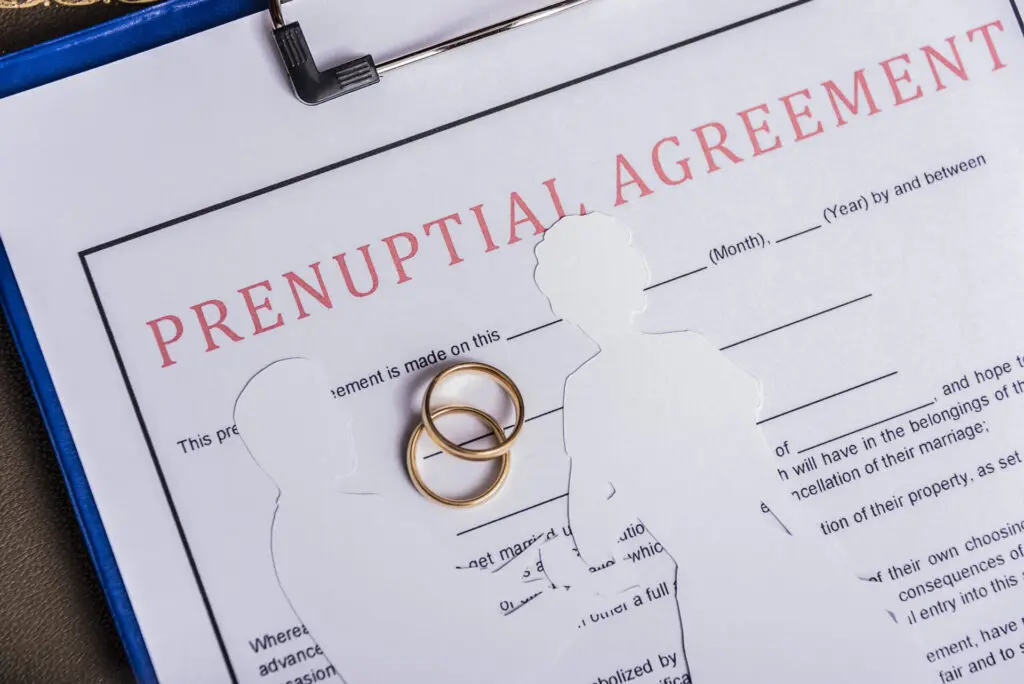

Prenuptial agreements are not only for the ultra-wealthy. Many couples choose prenups to promote transparency and reduce uncertainty.
A prenup may be appropriate if you:
Own a business or professional practice
Have significant assets, investments, or real estate
Receive stock options, RSUs, or variable compensation
Are entering a second marriage or blended family
Want to clarify responsibility for existing debts
Value predictability and proactive planning
A Los Angeles prenuptial agreement lawyer can help ensure the agreement reflects your intentions and complies with California law.
California prenuptial agreements are governed by the Uniform Premarital Agreement Act (UPAA) and related Family Code provisions. Enforceability often depends on both substance and process.
Key requirements typically include:
A written and signed agreement
Voluntary execution without coercion or undue pressure
Full and fair financial disclosure (or a valid written waiver)
A minimum seven-day review period before signing
Independent legal counsel, particularly for spousal support provisions
Terms that are not unconscionable at the time of enforcement
Careful attention to these requirements significantly improves enforceability.
Serving Los Angeles, Beverly Hills, Santa Monica and nearby cities
Nicole Duncan is a California family law attorney who regularly drafts, negotiates, and reviews prenuptial agreements for clients with diverse financial profiles, including entrepreneurs, executives, creatives, and professionals.
Her background in business and litigation allows her to approach prenups with both legal precision and practical insight. Nicole focuses on drafting agreements that are clear, balanced, and tailored to each client’s circumstances—while remaining firmly grounded in California law.
Our firm takes a structured, transparent approach to prenuptial agreements:
This process is designed to reduce future disputes and provide clarity from the outset.
Still exploring what to include in a California prenup?
Our interactive clause tool helps you identify the right provisions based on your relationship, lifestyle, and legal concerns.


Duncan Family Law represents clients throughout Los Angeles, including Beverly Hills, Santa Monica, West Hollywood, Downtown Los Angeles, and surrounding communities.
Clients choose our firm for:
Thoughtful, detail-oriented legal guidance
Experience with complex financial and business assets
Clear communication and responsive support
A practical, forward-looking approach to family law planning
A prenuptial agreement can be a valuable planning tool when prepared carefully and fairly. Early legal guidance helps ensure the agreement reflects your intentions and complies with California law.
Contact Duncan Family Law today to schedule a confidential consultation with Nicole Duncan, a Los Angeles prenuptial agreement lawyer experienced in drafting and reviewing complex agreements.
Duncan Family Law Divorce Lawyers Los Angeles
Address: 8075 W 3rd St, Los Angeles, CA 90048
Phone: (855) 369-9993

A prenuptial agreement is a written contract signed before marriage that defines how assets, debts, income, and certain financial issues will be handled if the marriage ends by divorce or death.
Yes, prenuptial agreements are enforceable in California if they meet legal requirements, including voluntary execution, full financial disclosure, and compliance with statutory safeguards.
A prenup may address property division, spousal support terms, business interests, inheritance rights, debt allocation, and financial management during marriage. Child custody and child support cannot be decided in advance.
For a more detailed breakdown of what to include in a California prenup, use our interactive clause finder to explore tailored provisions based on your situation.
Yes. California law generally requires at least seven calendar days between when the final agreement is presented and when it is signed to reduce pressure and ensure informed consent.
Independent legal counsel is strongly recommended for both parties. If spousal support is limited or waived, the party giving up that right must have independent counsel for that provision to be enforceable.
Yes. Prenuptial agreements are commonly used to protect ownership interests in businesses, partnerships, professional practices, and future business growth.
Yes. A prenup may address how stock options, RSUs, bonuses, and deferred compensation are classified, including whether they are treated as separate or community property.
Yes. Prenups can address ownership, classification, and division of cryptocurrency and other digital assets, provided they are properly disclosed and clearly described.
Yes. Each party must provide a fair and reasonable disclosure of assets, debts, and income, unless disclosure is knowingly and expressly waived in writing after adequate information is provided.
A prenup may be challenged if there was coercion, lack of disclosure, insufficient review time, or if the agreement is found to be unconscionable at the time of enforcement.
Yes. A prenup may be amended or replaced after marriage through a postnuptial agreement, provided both parties agree and legal requirements are met.
Ideally, the prenup process should begin well in advance of the wedding date to allow time for disclosure, negotiation, independent review, and the required waiting period.
Prenuptial agreements involve significant legal and financial consequences. Legal guidance helps ensure the agreement is enforceable, compliant with California law, and aligned with long-term goals.